Silverfish: what they eat and how to get rid of them
Silverfish need damp air, and a Philippine house in the rainy season gives them plenty of it. They eat paper, the glue in book bindings and wallpaper, starch and cloth. Drying the room out does more against them than any spray.
If they are in more than one room or keep coming back, our general pest control and prevention visit finds where they hide and treats the cracks they live in.
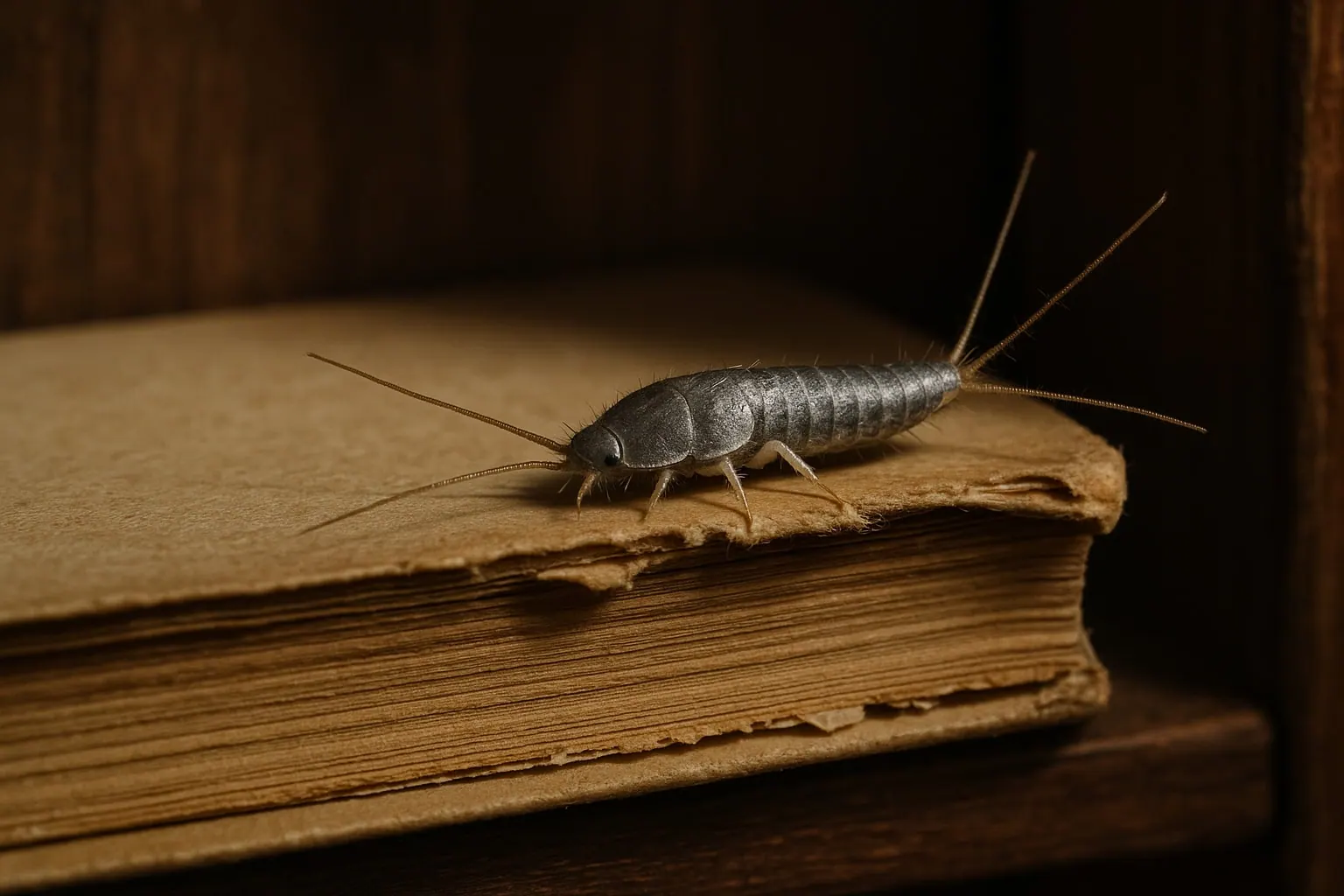
What a silverfish looks like
- Size: up to about 12 mm, smaller than a fingernail.
- Body: flat, wide at the head and tapering to the tail, covered in silvery scales.
- Ends: antennae about as long as the body at the front, and three long, thin tails at the back.
- Moves: fast and wriggling, out of sight as soon as a light comes on. They feed at night.
A brown, mottled one in a hot spot, beside an oven or a water heater or under the roof, is likely a firebrat, a close relative that likes heat. Both are dealt with the same way.
What causes silverfish in the house
Damp. Silverfish need high humidity, and they do best between 22 and 27 °C, though they survive well outside that range. The places they collect are the damp, dark ones: bathrooms, the space under a sink, closed cabinets and aparador, boxes of old papers, storerooms, and walls that stay wet after the rains.
They hide in narrow cracks by day and can live for weeks without food. With water nearby they can go far longer, and a silverfish lives two to three years or more. So a few in a damp storeroom can become a lot by the end of the wet season.
What silverfish eat and damage
Anything with starch, sugar or cellulose in it, and some protein:
- Paper, books and old documents, and the glue that holds book bindings together
- Wallpaper and its paste
- Starched clothes and linens, cotton and silk
- Cereals, flour and other dry food left open
The damage shows as ragged, irregular holes and thinned edges on paper and cloth, sometimes with their droppings nearby. Most of the harm is to things: certificates, photographs, school records, books and stored clothes.
How to get rid of silverfish
- Lower the humidity. Ventilate bathrooms and closed rooms, run a fan, and use a dehumidifier in a cabinet room or storeroom that stays damp. Fix leaks and wipe up standing water.
- Move paper out of damp places. Store documents, photographs and books in sealed plastic boxes, off the floor and away from outside walls.
- Vacuum along skirting boards, inside cabinets and drawers, and under the sink.
- Seal the cracks in walls, around pipes and along cabinet backs where they hide.
- Keep dry food closed in jars or containers with tight lids.
- Use a drying dust such as diatomaceous earth worked into cracks and voids, where it stays dry and away from children and pets.
Sticky traps set overnight show where they are and how many. For a heavy or spread-out problem, a crack and crevice treatment is part of a general pest control visit.
Silverfish are food for house centipedes, so a house with many silverfish often has centipedes too: see centipede bite. Termites eat paper too, and the damage can look alike at first, but termites leave mud tracks and hollow wood, which silverfish never do. If you see those, read anay sa bahay. We cover Pampanga, Bulacan, Bataan, Tarlac and Olongapo.
Sources
- Penn State Extension, Bristletails (Silverfish and Firebrats), read 5 October 2026
- University of Florida IFAS Extension, Silverfish, Lepisma saccharina (EENY-705), read 5 October 2026
- Penn State Extension, House Centipedes, read 5 October 2026
Tell us what you have found
Send the pest, the town and roughly how long it has been going on. That is enough for us to say what the treatment would involve and what it depends on.