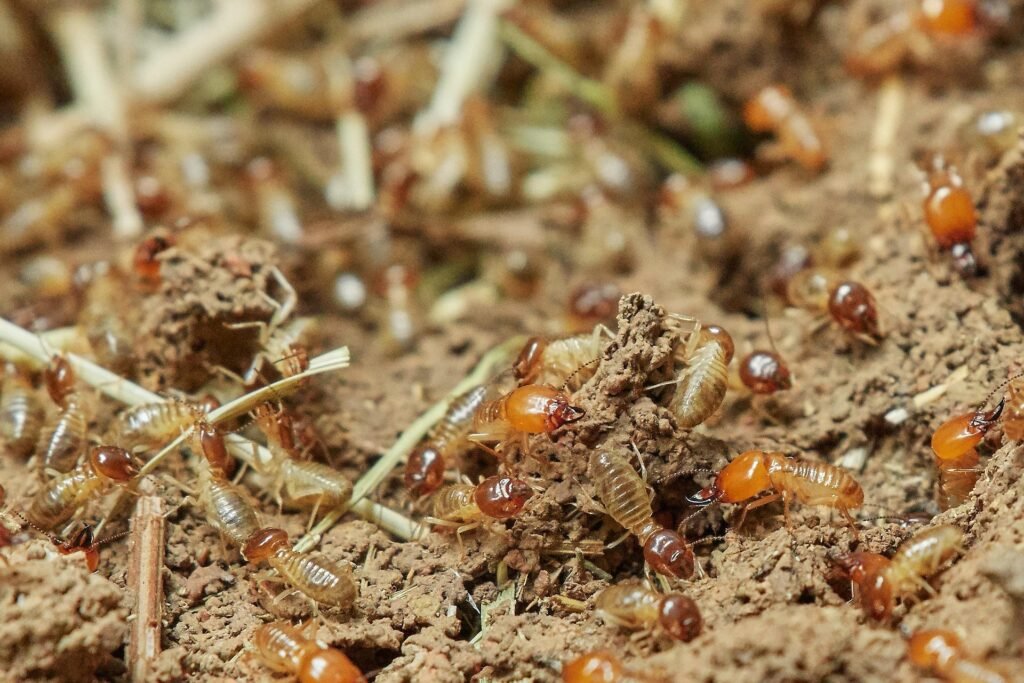
The Hidden Threat in Your Home
Termites are often called “silent destroyers” because they can cause major damage long before you notice their presence. They quietly eat away at wood, flooring, and even wallpaper, often leaving homeowners with costly repairs. The good news is that there are clear warning signs you can watch for. In this article, we’ll walk you through the 10 most common signs of a termite infestation so you can act before it’s too late.
1. Hollow-Sounding Wood
When termites feed inside wood, they leave behind thin outer layers. Tap on wooden furniture, walls, or floors — if it sounds hollow or papery, termites may be inside.
2. Mud Tubes
Subterranean termites build pencil-sized mud tubes on walls, foundations, or crawl spaces to protect themselves as they travel. These are one of the most obvious signs of activity.
3. Discarded Wings
Swarming termites shed their wings after finding a place to start a colony. Finding small piles of wings near windows or doors is a strong indicator of an infestation.
4. Blisters in Wood Flooring
Uneven or blistered wood floors may be a sign that termites are tunneling just below the surface.
5. Tight-Fitting Doors and Windows
As termites eat through wood, moisture builds up and causes warping. This can make doors and windows suddenly harder to open or close.
6. Peeling Paint That Resembles Water Damage
If paint bubbles or peels but no water leak is present, termites might be tunneling underneath.
7. Frass (Termite Droppings)
Drywood termites leave behind small, wood-colored droppings called frass. If you notice piles of this sawdust-like material, termites could be nearby.
8. Clicking Sounds Inside Walls
Believe it or not, you may be able to hear termites. Soldier termites make faint clicking noises inside walls as a warning signal to the colony.
9. Damaged or Crumbling Wood
Wood that easily breaks, crumbles, or shows maze-like patterns inside is a major red flag of long-term termite damage.
10. Live Termites
The clearest sign is spotting live termites. They’re small, pale insects that are often mistaken for ants. If you see them, an infestation is already underway.